
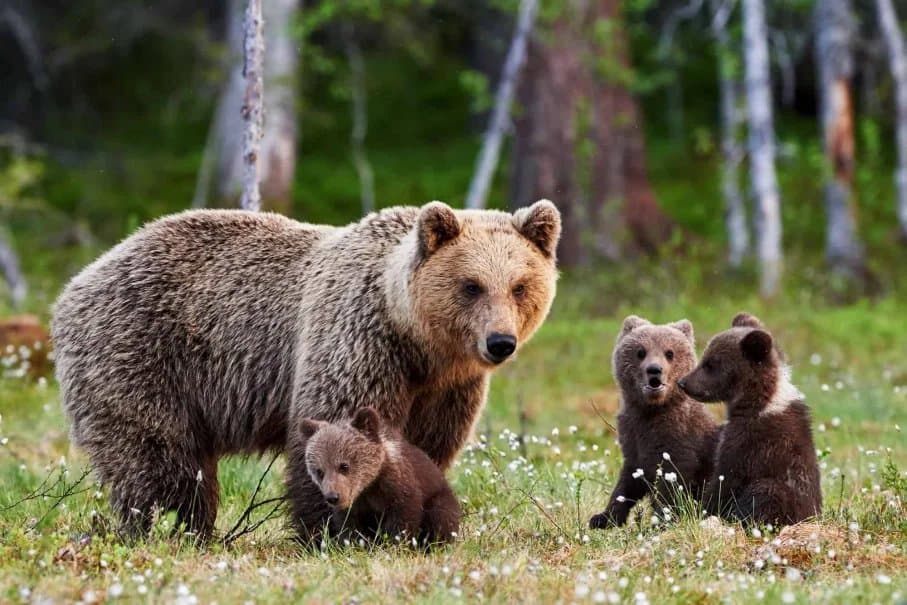
Alaska is one of the best places in the world for wildlife viewing, and Southcentral Alaska is no exception. Whether you dream of seeing a massive grizzly bear in the wild, watching bald eagles soar overhead, or spotting a pod of whales in the ocean, this region offers incredible opportunities to witness nature at its finest.
Moose: The Giants of the Forest
Towering over most other wildlife, moose are the largest members of the deer family and one of the most iconic animals in Alaska. With males (bulls) standing up to 7 feet tall at the shoulder and weighing over 1,500 pounds, these impressive creatures are a must-see for visitors and locals alike.
Moose in Southcentral Alaska
Southcentral Alaska is home to one of the highest moose populations in the state, making it one of the best places to observe them in the wild. Moose are highly adaptable and can be found in dense forests, wetlands, open meadows, and even urban areas. In Anchorage, it's not uncommon to see a moose strolling through neighborhoods, munching on backyard trees, or even wandering through parking lots. Despite their size, moose are excellent swimmers and can often be found wading through marshes and lakes in search of aquatic plants. While they may appear calm, moose can be unpredictable and defensive, especially during calving season (May-June) and rutting season (September-October).
Best Places to See Moose in Southcentral Alaska
1. Kincaid Park (Anchorage) - Urban Moose Encounters
- Best For: Close-up moose sightings while hiking or biking
- What You'll See: Moose, bald eagles, black bears
- Best Time to Visit: Early morning or late evening
Located on the western edge of Anchorage, Kincaid Park is a prime moose-spotting location. This vast park features thick forests, open meadows, and miles of hiking and biking trails where moose are commonly seen. The park's proximity to the coast also makes it an excellent spot for birdwatching and breathtaking views of Cook Inlet.
Pro Tip:
Visit during winter when moose move to lower elevations and can be easily spotted along the trails or near the park's entrance.
2. Potter Marsh (Anchorage) - Wetland Wildlife Watching
- Best For: Seeing moose feeding in marshy areas
- What You'll See: Moose, waterfowl, beavers, swans
- Best Time to Visit: Spring and early summer
Just south of Anchorage along the Seward Highway, Potter Marsh is a scenic wetland teeming with wildlife. The area's boardwalk trails offer a safe and accessible way to observe moose, which are often seen feeding on aquatic plants near the water's edge.
Pro Tip:
Bring binoculars for an even better view of moose, along with other wetland creatures like beavers, ducks, and trumpeter swans.
3. Kenai National Wildlife Refuge - True Wilderness Moose Sightings
- Best For: Spotting moose in their natural habitat
- What You'll See: Moose, bears, wolves, caribou
- Best Time to Visit: Summer and fall
For those seeking a true wilderness experience, the Kenai National Wildlife Refuge offers some of the best moose viewing in Alaska. Covering nearly 2 million acres, this refuge provides vast, protected habitat where moose roam freely. The best way to see moose here is by driving along the Sterling Highway or hiking through the refuge's many trails.
Pro Tip:
For a higher chance of moose sightings, explore the Skilak Lake Loop Road, a scenic drive that winds through prime moose habitat.
Moose Behavior & Viewing Tips
🟢 Best Time to Spot Moose:
🕕 Dawn & Dusk - Moose are most active during these cooler hours.
❄️ Winter Months (November - March) - Moose move to lower elevations and often wander into populated areas, making them easier to find.
⚠️ Safety Tips for Moose Watching:
✅ Keep Your Distance: Stay at least 50 yards away from moose at all times.
✅ Avoid Getting Between a Moose & Its Calf: Mother moose are extremely protective and may charge if they feel their calf is threatened.
✅ Watch for Warning Signs: If a moose lays its ears back, raises its hackles, or licks its lips, back away slowly-these are signs it may charge.
✅ Give Moose the Right of Way: If you see a moose on a trail or roadway, do not approach. Wait for it to move away on its own. 📸 Photography Tips for Moose:
📷 Use a Zoom Lens: Keep a safe distance while capturing close-up shots.
🌅 Shoot During Golden Hour: Early morning and late evening light enhances the natural beauty of moose and their surroundings.
❄️ Winter Shots Are Stunning: Snow-covered landscapes provide a beautiful contrast against the dark brown fur of moose.
Grizzly and Black Bears: Majestic Predators of Alaska
Southcentral Alaska is home to two of North America's most iconic predators: the grizzly bear (brown bear) and the black bear. These massive carnivores roam Alaska's vast wilderness, playing a crucial role in the ecosystem.
- Grizzly Bears 🐻❄️ - Also known as brown bears, grizzlies are typically larger than black bears and are often found along salmon-rich rivers and coastal regions.
- Black Bears 🐻 - Smaller and more agile, black bears prefer forested areas and mountainous terrain and are more commonly spotted near hiking trails.
From the legendary salmon-catching grizzlies at Brooks Falls to remote coastal bear encounters at Chinitna Bay, Alaska offers some of the best bear-viewing experiences in the world.
Best Places to See Bears in Alaska
1. Brooks Falls (Katmai National Park) - The Most Iconic Bear Viewing Spot
- Best For: Watching grizzlies catch salmon mid-air
- What You'll See: Grizzly bears fishing, stunning waterfalls
- Best Time to Visit: July (peak salmon run), September (pre-hibernation feeding frenzy)
- How to Get There: Access is via a small plane from Anchorage, King Salmon, or Homer
Brooks Falls is world-famous for its iconic bear-viewing opportunities. Every summer, dozens of grizzly bears gather here to feast on salmon swimming upstream. The raised viewing platforms offer safe and unobstructed views of bears in their natural habitat.
Pro Tip:
Book your trip months in advance-Brooks Falls is one of the most sought-after bear-viewing destinations in the world!
2. Crescent Lake (Kenai Peninsula) - A Remote Bear-Viewing Adventure
- Best For: Guided bear tours in a peaceful setting
- What You'll See: Bears fishing in a pristine lake, bald eagles, moose
- Best Time to Visit: June - September
- How to Get There: Access via floatplane from Soldotna or Anchorage
Crescent Lake, located within Lake Clark National Park, offers some of the best bear-viewing tours in Southcentral Alaska. Here, grizzlies and black bears are often spotted along the shoreline, fishing for salmon in the crystal-clear waters of the lake.
Pro Tip:
Bring a telephoto lens for incredible close-up bear photography while maintaining a safe distance.
3. Chinitna Bay (Lake Clark National Park) - The Ultimate Coastal Bear Experience
- Best For: Seeing large numbers of grizzlies in open meadows
- What You'll See: Coastal brown bears grazing, hunting, and playing
- Best Time to Visit: June - August
- How to Get There: Fly-in access via chartered plane from Anchorage or Homer
Chinitna Bay is one of the best places in the world to see grizzly bears in a wild, open landscape. Unlike Brooks Falls, where bears congregate around waterfalls, the bears of Chinitna Bay are often seen digging for clams, grazing on sedge grass, and roaming the tidal flats. The lack of crowds makes this a more intimate wildlife experience.
Pro Tip:
Book a guided tour with an experienced naturalist to learn about bear behavior while ensuring a safe and respectful viewing experience.
Bear Safety: How to Watch Bears Responsibly
While seeing bears in the wild is an unforgettable experience, it's essential to follow safety guidelines to protect both yourself and the bears. 🟢 Do:
✅ Observe from a distance - Use binoculars or a zoom lens to get a close-up view without disturbing the bears.
✅ Make noise on hiking trails - Let bears know you're there to avoid surprising them.
✅ Store food properly - If camping, use bear-proof containers to keep food and trash secure.
✅ Respect National Park Rules - Follow designated viewing areas and listen to your guides. 🔴 Don't:
❌ Never approach a bear - Getting too close can trigger defensive behavior.
❌ Do not run - If you encounter a bear, stay calm, talk calmly, and slowly back away. Running can provoke an attack.
❌ Never feed bears - This teaches them to associate humans with food, leading to dangerous encounters.
Best Time of Year for Bear Viewing in Alaska
🟢 Summer (June - August) - The best time to see coastal brown bears and salmon-hunting grizzlies. 🔵 Fall (September - October) - Bears enter hyperphagia, meaning they eat excessively before hibernation, making them more active. ❄️ Winter (November - March) - Bears hibernate, making sightings extremely rare.
Bald Eagles: America's Iconic Bird
Majestic, powerful, and deeply symbolic, the bald eagle is one of the most recognizable birds in North America. These impressive raptors, with their striking white heads and dark brown bodies, are a common sight in Southcentral Alaska, where they thrive along the coastlines, rivers, and lakes.
Why Alaska is a Bald Eagle Haven
- Alaska has the largest population of bald eagles in the United States, with an estimated 30,000 eagles calling the state home.
- Eagles are often seen perched on tall trees near bodies of water, where they scan for salmon and other fish.
- Winter brings higher concentrations of bald eagles to areas where fish are more abundant.
Best Places to See Bald Eagles in Southcentral Alaska
1. Homer Spit - A Winter Eagle Hotspot
- Best For: High eagle concentrations, especially in winter
- What You'll See: Dozens of eagles, seabirds, and marine life
- Best Time to Visit: November - March
Homer Spit is one of the best places in Alaska to see bald eagles, especially during the winter months when food sources become scarce elsewhere. Eagles flock to the area to feast on fish remains from the local fishing industry. The sight of multiple eagles perched along the shoreline or soaring over Kachemak Bay is truly unforgettable.
Pro Tip:
Visit in February for the highest concentration of bald eagles, as they gather near harbors and fishing docks.
2. Kenai River - Eagle Watching During Salmon Runs
- Best For: Seeing eagles hunt for fish
- What You'll See: Eagles diving for salmon, moose, and other wildlife
- Best Time to Visit: July - September (salmon season)
The Kenai River is a prime location for spotting bald eagles, especially during salmon runs. Eagles can often be seen perched in trees along the riverbanks, waiting for the perfect moment to snatch a fish from the water.
Pro Tip:
Take a float trip down the Kenai River for incredible eagle photography opportunities.
3. Prince William Sound - Eagles & Coastal Beauty
- Best For: Spotting eagles on boat tours
- What You'll See: Eagles, sea otters, whales, and glaciers
- Best Time to Visit: May - September
Prince William Sound offers a picturesque backdrop for wildlife lovers and photographers. Eagles frequently nest on cliffs and trees along the shoreline, providing great viewing opportunities during boat tours.
Pro Tip:
Book a glacier and wildlife cruise for the chance to see both bald eagles and marine mammals in one trip.
Whales and Marine Life: The Ocean Giants of Alaska
Alaska's coastal waters are teeming with marine life, making it one of the best destinations for whale watching and wildlife tours. From breaching humpback whales to playful sea otters, the waters of Southcentral Alaska are a haven for marine enthusiasts.
Best Places for Whale Watching in Southcentral Alaska
1. Resurrection Bay (Seward) - A Whale Watching Paradise
- Best For: Consistent whale sightings, scenic boat tours
- What You'll See: Humpback whales, orcas, puffins, sea lions
- Best Time to Visit: May - September
Resurrection Bay is one of the most reliable places in Alaska for whale watching. Humpback whales migrate here in the summer to feed on krill and herring, while orcas patrol the waters year-round. Several wildlife boat tours depart from Seward, providing exceptional whale-viewing opportunities.
Pro Tip:
Book a full-day tour to increase your chances of seeing multiple whale species and other marine life.
2. Prince William Sound - A Hidden Gem for Whale Watching
- Best For: Spotting a variety of marine animals
- What You'll See: Humpback whales, orcas, harbor seals, sea otters
- Best Time to Visit: May - September
Prince William Sound offers breathtaking coastal scenery and less crowded whale-watching tours compared to other areas. In addition to whales, visitors can spot massive tidewater glaciers, otters floating in kelp beds, and seals sunbathing on icebergs.
Pro Tip:
Choose a small-group boat tour for a more intimate whale-watching experience.
3. Kenai Fjords National Park - A Prime Whale-Watching Destination
- Best For: Seeing humpback whales and orcas in a stunning national park
- What You'll See: Whales, glaciers, puffins, sea lions
- Best Time to Visit: June - August
Kenai Fjords National Park is one of the best places in Alaska to see marine life up close. During the summer months, humpback whales are frequently seen breaching near the glacier-fed waters, and orcas travel in pods along the coastline.
Pro Tip:
Bring warm layers and rain gear-even in summer, the waters near glaciers can be chilly and misty.
Tips for Responsible Wildlife Viewing
✅ Keep Your Distance - Always maintain a safe distance from wildlife to avoid stress or danger.
✅ Use Binoculars or Camera Zoom - Get great views without disturbing animals.
✅ Respect Nature - Follow all park guidelines, and never feed wildlife.
✅ Choose Ethical Tours - Book wildlife-friendly tours that prioritize animal safety.
✅ Leave No Trace - Pack out everything you bring in to preserve Alaska's pristine environment.
Final Thoughts
Southcentral Alaska offers unparalleled opportunities to see bald eagles, whales, and other incredible wildlife in their natural habitat. Whether you're standing on the shores of Homer Spit watching eagles soar, or cruising through Kenai Fjords spotting breaching whales, every experience is a magical glimpse into Alaska's wild beauty. Looking for more Alaska wildlife experiences? Check out our full guide to Alaska's top wildlife destinations here.
Final Thoughts
Southcentral Alaska is a paradise for wildlife lovers. Whether you're searching for moose in Anchorage, spotting bears along the Kenai Peninsula, or watching whales in Prince William Sound, there's no shortage of incredible animal encounters. Plan your visit and experience the magic of Alaska's wild beauty!